


BofA CEO: Legalizing Interest on Stablecoins Will Lead to an Outflow of Up to $6T

- Brian Moynihan believes that approving interest payments to stablecoin holders will lead to an outflow of deposits.
- He mentioned an amount of up to USD 6 trillion, about one third of all funds deposited in American banks.
- The BofA CEO believes that this will directly affect the US economy.
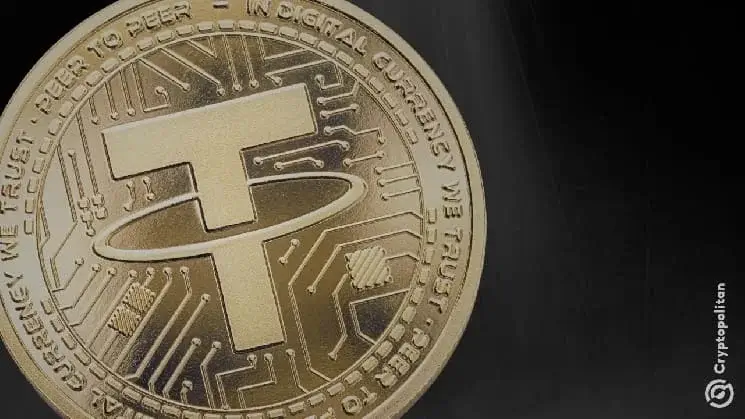
Legalizing the payment of interest income on stablecoins will lead to an outflow of up to USD 6 trillion in bank deposits from the American financial sector, which is fraught with risks. This forecast was made by Bank of America (BofA) CEO Brian Moynihan, allegedly referring to a study by the US Treasury Department.
The BofA CEO raised this topic during a conference call on the results of the fourth quarter of 2025. According to him, stablecoins resemble money market mutual funds in their structure, as they also hold reserves in high-yield and liquid assets.
In such a setup, the money is outside the banking system, Moynihan noted. A reduction in the volume of deposits, in turn, will limit counterparties’ ability to provide lending, which will directly affect the US economy.
“If you remove the deposits, then they [the banks] will not be able to issue loans, or they will have to raise funding from other sources, and that will also have its own cost,” Moynihan said.
According to his estimate, legalizing the possibility of paying interest to stablecoin holders will lead to an outflow of up to USD 6 trillion in deposits. This is about one third of all assets deposited in American banks.
It is worth noting that the issue of paying interest to stablecoin holders is one of the key questions in forming the regulatory framework for the crypto market in the US. The banking sector is strongly opposed to legalizing such a mechanism.
It would turn stablecoins into an analogue of deposits with an increased rate, while the requirements for issuers of such assets are lower than for traditional financial counterparties.
Earlier, we covered a statement by Senator Cynthia Lummis, according to which a compromise was reached in developing an interim version of the framework bill. In terms of stablecoins, it provides for a ban on payments for merely holding such assets, but allows rewards for active participation.
However, given that the Senate Banking Committee has put the process of developing its own version of the bill on hold, when exactly the regulatory framework will come into force remains an open question.
In his statement during the conference, Moynihan refers to the U.S. Treasury. However, no such report has been published previously.
- CEO Brian Moynihan's plans are a game changer.
- Now lawmakers have to step up to pass meaningful legislation.
- Still, some tempered expectations around banks issuing stablecoins.
Fintechs embraced crypto long ago, then Wall Street asset management firms did the same by rolling out Bitcoin ETFs last year.
Now it’s the banks’ turn.
On Tuesday, Brian Moynihan, the CEO of Bank of America, said the increasing acceptance of stablecoins for payments is coming fast.
But there’s a catch — Congress will have to pass legislation establishing rules for their use, and President Donald Trump will have to sign it into law.
“It’s pretty clear there’s going to be a stablecoin,” Moynihan said in an interview at the Economic Club in Washington. “If they make that legal, we’ll go into that business.”
Watershed moment
The importance of this moment shouldn’t be underestimated.
Banks, by their nature, move glacially in adopting new innovative practices, especially technological ones involving the processing of payments.
So for Moynihan, who leads the second biggest US bank with $3.3 trillion in assets, to unambiguously embrace stablecoins is huge. It means other bank chieftains will probably follow suit.
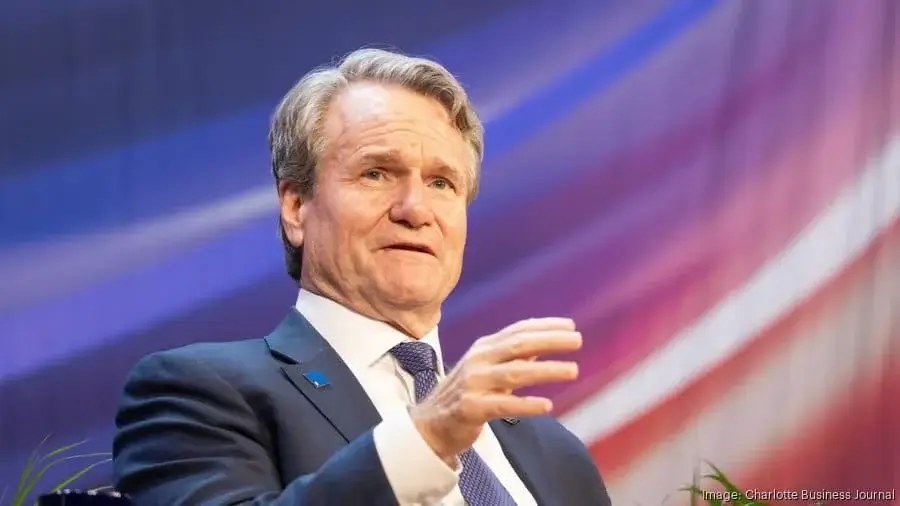
Still, Moynihan, who has led BofA since 2010, cautioned that the exact role stablecoins may play in payments remains fuzzy.
“The question of what it’s going to be useful for is going to be interesting,” he said.
‘It’s going to be a new payment method.'
— Chris Colson, Federal Reserve
The ball is now very much in lawmakers’ court.
A number of bills are under consideration on Capitol Hill, including the STABLE Act and the GENIUS Act, which would define the rules of the road for stablecoins.
Yet there’s still a long way to go before approved versions of the bills are sent to President Donald Trump for his signature, and the crypto industry is watching closely to make sure they don’t contain unwanted restrictions.
And bankers such as Moynihan are bound to be attuned to any potential events that might cast doubt on the integrity of these instruments, such as their use in money laundering and illicit finance.
Stablecoins, tokens that are pegged to the US dollar, have become by many measures the most useful instrument in crypto.
Myriad offerings
By letting users easily convert fiat currencies to crypto and vice versa, Tether’s USDT and Circle’s USDC are the lifeblood of the $3 trillion crypto market.
Now a bevy of traditional players are rolling out their own stablecoins as expectations rise they will be integrated into payments infrastructure. PayPal, MasterCard, and Robinhood are but a few of the companies that have developed their own offerings.
“It’s going to be a new payment method,” Chris Colson, the Federal Reserve Bank of Atlanta’s payments researcher told DL News this week.
Investment banks are also eyeing stablecoins.
Other articles

5 Things to Know Before the Stock Market Opens
Stock futures are pointing to a higher open Thursday amid a chip stock rally, while investors also

Vexl: Empowering Peer-to-Peer Bitcoin Exchange Through Social Networks
In an era where centralized exchanges dominate cryptocurrency trading, Vexl stands out as a

The head of the Czech central bank urged not to equate Bitcoin with other crypto assets
Ales Michl published his opinion on Bitcoin amid the LIBRA scandal. The head of the CNB believes
The Bitcoin Pi Cycle Top Indicator: How to Accurately Time Market Cycle Peaks
The Bitcoin Pi Cycle Top Indicator has gained legendary status in the Bitcoin community for its